Mar 5, 2026
How to Market a Website in 2026 A Founder's Playbook
Learn how to market a website with this founder's playbook. Get actionable strategies for SEO, content, and promotion to drive growth for your new site in 2026.

Before you spend a dime on ads or even write a single blog post, you need to lay the groundwork. This isn't the "fun" part of marketing, but getting this foundation right is what separates websites that get traction from those that just... exist.
Build Your Go-To-Market Foundation

Let's be real: the internet is an incredibly crowded place. Every single minute, 175 new websites are launched. That adds up to a mind-boggling 252,000 every day. For a founder without a technical background, figuring out how to stand out can feel overwhelming.
This is where your go-to-market strategy comes in. It’s your game plan. It’s how you define who you are, who you’re helping, and why they should choose you over everyone else. Without this clarity, you’ll end up throwing marketing spaghetti at the wall, hoping something sticks. A solid foundation ensures every effort, from a social post to a paid ad, is pulling in the same direction.
Define Your Unique Value Proposition (UVP)
Your UVP is the heart of your message. It’s a simple, powerful statement that answers the most important question a potential customer has: "Why should I care?" It’s not just a clever tagline; it’s the core reason someone decides to sign up, buy, or learn more.
A strong UVP instantly connects. It should be:
Specific: What concrete results or benefits will a customer get?
Problem-Focused: How do you solve a real, nagging pain point they have?
Unique: What’s the one thing you do better or differently than anyone else?
For example, instead of a generic "We sell easy-to-use project management software," a killer UVP would be: "The first project management tool built for non-technical teams to ship products twice as fast." See the difference? One is a description; the other is a promise.
Conduct a Lightweight Competitor Analysis
You don’t need to commission a massive, thousand-dollar market research report. All you need is a "lightweight" analysis. Pick 3-5 of your closest competitors—both direct and indirect—and do some digging. Look at their website messaging, the main keywords they target, and the kind of content they produce.
Key Takeaway: Your goal here isn't to copy them. It's to find the gaps. Look for what your competitors aren't saying or doing well. Is their pricing a confusing mess? Is their product a nightmare for beginners? These weak spots are your openings.
To give you a head start, here’s a quick checklist to run through before you go live.
Pre-Launch Marketing Checklist
This table summarizes the essential marketing tasks you should tackle before your website ever sees the light of day. Nailing these down will ensure you launch with purpose and momentum.
Task Area | Action Item | Why It Matters |
|---|---|---|
Messaging | Define your UVP | This is the core of all your marketing. It must be clear and compelling. |
Audience | Create a basic customer persona | You can't talk to everyone. Knowing who you're talking to makes your message resonate. |
Competition | Analyze 3-5 competitors' messaging and content | Helps you find a unique angle and avoid being just another "me-too" product. |
SEO | Identify 5-10 core "money" keywords | These are the foundational terms you want to rank for to attract qualified traffic. |
Content | Draft 2-3 cornerstone blog posts | Establishes your expertise and gives you valuable assets to share at launch. |
Completing these steps gives you a strategic advantage and a clear roadmap for what comes next.
Finally, understanding the landscape of modern search is non-negotiable. For a deep dive, check out this definitive guide to AI Search Engine Optimization. Remember, the cost to build your site is just the price of entry; effective marketing is what actually builds the business. We cover the financial side of this in our article on how much app development costs. Balancing your build budget with a smart marketing plan is the key to a successful launch.
Building Your Core Content: The Pages That Actually Convert
Let's be honest, your website's content is what does the heavy lifting. But you don't need to write a novel before you launch. The goal right now is to build a "minimum viable content" setup—just a handful of essential pages that do one thing really well: convince visitors you're the right choice.
Think of these pages as your digital storefront. When someone walks in, they need to know what you're about instantly. Your homepage, about page, and the pages detailing your product or service are the absolute, non-negotiable minimums you need to get this right.
Crafting Your Pillar Pages
Your homepage is your first, and maybe only, impression. It has to answer three questions in less than 5 seconds: What is this? Who is it for? And what do I do next? Nail this with a sharp, benefit-focused headline and an unmissable call-to-action (CTA) button right at the top.
Don't sleep on your about page; it's often the second page people click on. This is where you build trust. Forget the corporate jargon and dry resume points. Tell your story. Why did you start this? What problem drove you crazy enough to build a solution? People connect with purpose, so share yours.
Finally, your service or product pages are where you make your case. The key here is to talk about benefits, not just features. Instead of saying, "Our tool includes a robust API," frame it around the customer's needs: "Connect our tool to hundreds of other apps and automate your entire workflow." See the difference?
I've found it's incredibly helpful to map out how a user will actually move through your product before you even write a word of copy. When you understand their journey, your writing naturally aligns with their goals. If you're new to this, our guide on prototyping an app is a great starting point.
Simple Copywriting for Non-Writers
You don’t have to be a world-class copywriter to write effective website content. The best advice I can give is to simply write the way you talk. Aim for clarity over cleverness. Use short sentences, clear headings, and bullet points to make your text easy to scan.
As you build out your site, you can explore different content creation strategies to keep your messaging sharp, but for now, stick to a proven framework.
Here’s a simple formula that works every time:
Problem: Start by clearly stating the pain point your ideal customer is dealing with.
Agitation: Twist the knife a little. Dig into why that problem is so frustrating and what it costs them.
Solution: Now, present your product as the clear, obvious answer to that pain.
This structure works because it connects with the reader emotionally before presenting the logical solution, making your offer far more compelling.
How to Nail Your Launch Day
Your website launch isn't just a technical task on a checklist; it's your grand opening. Too many founders just quietly flip the "live" switch and hope people magically show up. A great launch is a promotional event, one you plan and execute with intention to create buzz, attract your first real users, and get that all-important initial feedback.
Think of it like throwing a party for your new business. You need to send out the invites, get people excited to come, and make sure they have a great time when they arrive. A strong start gives you momentum you can ride for weeks and even months. I've launched a few products myself, and this is the playbook I've refined for making a real splash.
Your Game Plan for Product Hunt
Product Hunt can be a goldmine for getting in front of early adopters, but you can't just show up on launch day and expect a warm welcome. Success there is all about the groundwork you lay beforehand. I’ve seen so many people make the mistake of just dropping a link and walking away, only to see their launch fizzle out.
The real work starts weeks in advance. Get active in the community. Follow other founders, leave thoughtful comments on products you actually like, and join in the discussions. When you build a reputation as a helpful member, people are much more likely to pay attention when it's your turn in the spotlight.
When your day comes, make sure your post is ready to go with a few key pieces:
A sharp, clear tagline: Just like your unique value proposition, this needs to tell people exactly what you do in a heartbeat.
An engaging first comment: As the founder, you need to kick off the conversation. Share your story—why you built this, the problem it solves, and what you're hoping to learn from the community.
Great visuals: Don't just tell, show. Use slick screenshots, GIFs, or a short video to demonstrate your website in action.
A tip from my own launches: Resist the urge to just beg your friends for upvotes. Product Hunt's algorithm can spot this, and it can actually hurt your ranking. Instead, share your launch announcement with your network and let them know you’d appreciate them checking it out and joining the conversation. Authentic interest is always more powerful.
Find Your People in Niche Communities
While Product Hunt is great for a broad tech audience, the real magic often happens in the smaller, focused communities where your ideal customers are already spending their time. Think about platforms like Reddit, Indie Hackers, or even specific Slack groups and forums for your industry.
The golden rule here is to give before you get.
Don't be the person who just drops a link and vanishes. That’s a fast track to getting your post deleted and your reputation tarnished. Instead, become part of the conversation. Share a specific challenge you overcame while building your site. Ask for honest feedback on a feature you're not sure about. When you lead with value, you build genuine connections.
When you do share your project, you're not just promoting a URL; you're showing people a solution. This is where understanding your user's journey is critical. You need to be able to explain how your site guides them from curious visitor to happy customer.
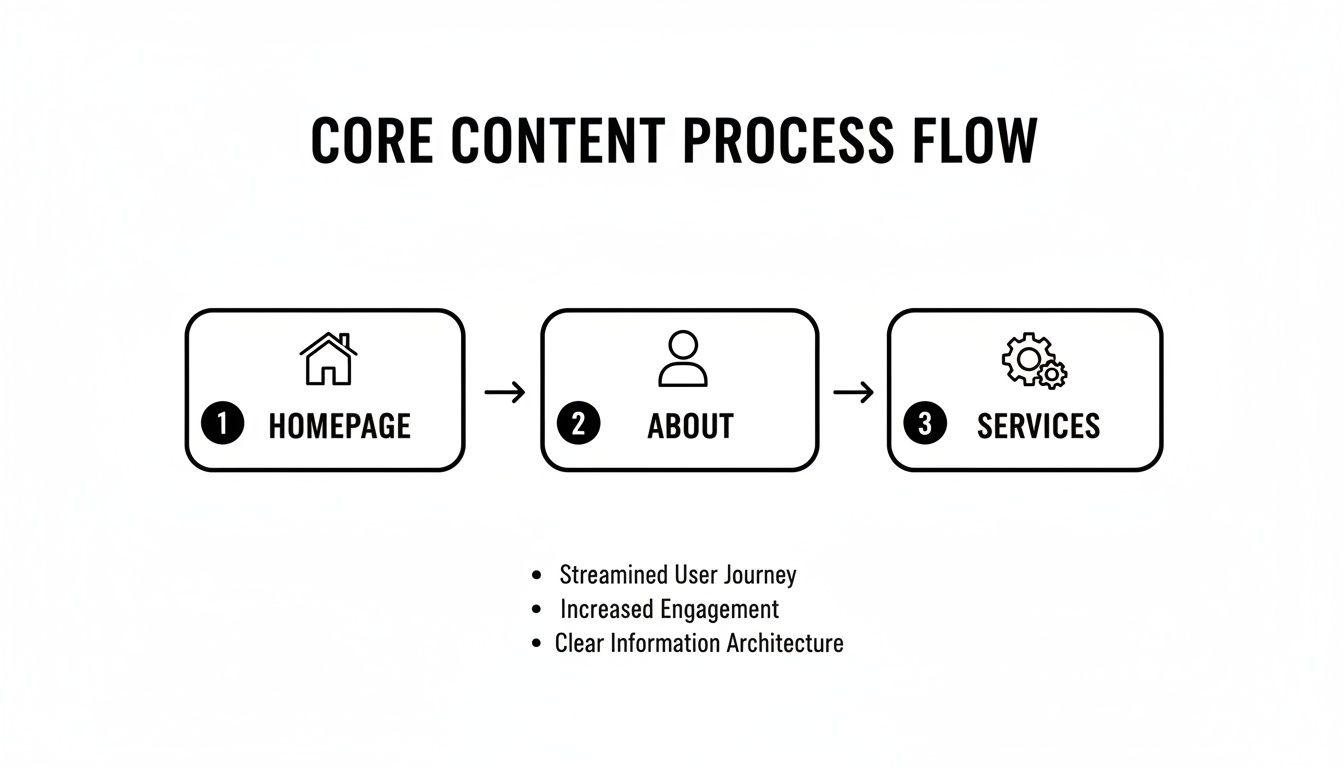
The flow from your homepage to your services and about pages has to feel completely natural. This is especially true in fast-growing markets. The global eCommerce space, for example, is projected to hit an incredible $3.85 trillion by 2026, as noted in this comprehensive Statista report.
This is where no-code tools give founders a massive edge. Platforms like Bubble let you build and launch so much faster, giving you a real shot at capturing a piece of that growth. If you're building with Bubble and want to get up to speed quickly, our one-on-one Bubble coaching sessions can help you get there.
Develop Sustainable Growth Engines
That launch-day high is an amazing feeling, but it doesn't last. To keep your website growing, you need to move beyond one-off promotional stunts and start building real, sustainable growth engines. These are the reliable channels that will bring a steady stream of the right people to your site, long after the initial launch buzz has died down.
Think of your launch as the rocket fuel that got you into orbit. Now, it's time to build the solar panels that will power your journey for years to come. This means getting serious about a few key marketing channels.
The goal here is to create a healthy mix of traffic sources. You never want to be at the mercy of a single channel. If a Reddit community suddenly changes its rules or a social media algorithm shifts overnight, you won't be left starting from scratch.
Build Your Content Marketing Flywheel
Content is the backbone of pretty much every long-term growth channel. It's what powers your SEO, gives you something valuable to share on social media, and convinces people to join your email list. But just churning out random blog posts won't cut it.
You need to focus on creating high-value "pillar" content that directly tackles your customer's biggest problems. I’m not talking about 500-word fluff pieces. I mean comprehensive guides, deep-dive tutorials, or resource centers that instantly position you as an expert.
Here's a solid approach I've seen work time and again:
Solve, Don't Just Describe: Pinpoint the most frustrating problems your customers face. Create content that walks them through solving that exact problem.
Make it Actionable: Theory is nice, but people want results. Give them checklists, templates, and clear step-by-step instructions they can use immediately.
Guide the Journey: Don't let a reader hit a dead end. Use internal links within your posts to guide them to your main product pages or other relevant articles, pulling them deeper into your world.
This creates a powerful flywheel effect. Great content earns links from other sites, which boosts your search rankings. Higher rankings bring in more traffic, and that new traffic discovers your solution.
Set Up a Simple Email Funnel
I can't stress this enough: email marketing is still a beast. It delivers an average ROI of around $36 for every $1 spent. It’s your own private, direct line to people who have raised their hand and shown interest. You have to start building your list from day one.
You don't need some crazy, 20-step automated sequence to get started. A simple funnel using a tool like Mailchimp is more than enough.
My Personal Tip: Give people a fantastic reason to sign up. Offer a "lead magnet"—a free PDF checklist, a short e-book, or access to an exclusive video—that is genuinely useful and directly related to the problem you solve. Make it an absolute no-brainer.
Once someone is on your list, the goal is to build a relationship, not just sell. A simple welcome sequence of 3-5 emails can build trust and gently introduce your solution without being pushy. This is how you turn a curious visitor into a future customer.
Experiment with Small-Budget Paid Ads
Paid ads can sound expensive and scary, but they don't have to be. For a new website, your main goal with ads on platforms like Google or Facebook isn't to get a flood of sales right away—it's to gather data.
By running small, highly targeted campaigns with a budget of just $10-$20 per day, you can learn incredibly fast. You're essentially paying to find out:
Which message works? Test different headlines and descriptions to see what value proposition gets the most clicks.
Who is your audience? See which demographics and interest groups respond best to your offer.
What keywords convert? Discover the exact search terms people use when they're ready to buy.
Think of it as paying for market research on steroids. The insights you get from a tiny ad spend can sharpen your entire content and SEO strategy, making all your free, organic efforts ten times more effective.
Measure What Actually Matters in Your Analytics

Let's be honest, staring at a wall of analytics can feel overwhelming. But if you want to grow, you have to measure. The trick is knowing what to ignore.
Forget about getting bogged down by vanity metrics like total page views. Sure, it feels good to see a big number, but it doesn’t tell you anything about the health of your business. Instead, we’re going to zero in on the data that tells a story: how people find you, what they do when they get there, and if they’re actually becoming customers. That's how you make smart decisions.
Choosing Your Core Metrics
To keep from drowning in data, you only need to track a handful of metrics that tie directly to your business goals. For a new website, these almost always fall into three categories: Acquisition, Engagement, and Conversion.
Acquisition Metrics: These show you where your traffic is coming from. Pay close attention to Traffic Sources. Are people finding you through Google (organic), social media, or links from other sites? This tells you which of your marketing efforts are actually working.
Engagement Metrics: This is all about what people do after they land on your site. The two most important numbers here are Bounce Rate (the percentage of people who leave after seeing just one page) and Average Session Duration. A high bounce rate, for example, is a huge red flag that your landing page isn't matching the promise you made in your ad or social post.
Conversion Metrics: This is the money metric. Your Goal Conversion Rate tracks how many visitors take the action you want them to, whether that's signing up for a trial, booking a demo, or making a purchase. It’s the ultimate report card for your website.
Seeing these numbers is just the start. The real magic happens when you use them to diagnose problems. For instance, if a blog post is getting tons of traffic but has a rock-bottom conversion rate, you know the content is good but the call-to-action probably isn't.
"A huge mistake I see founders make is tracking vanity metrics. They celebrate 10,000 visitors but ignore a 95% bounce rate. Your focus should be on the user's journey, not just their arrival. Data tells a story, and you need to learn to read it."
Building a Simple Founder Dashboard
You don’t need some fancy, expensive business intelligence tool. You can build a surprisingly powerful dashboard for free, right inside Google Analytics. It's the perfect way to get a quick, high-level view of your marketing performance without getting lost in the weeds.
Set up a custom dashboard and add these simple widgets:
Users by Channel: A pie chart is perfect for this. It gives you an at-a-glance look at where your traffic comes from—Organic Search, Social, Direct, or Referrals.
Top Landing Pages: This is a simple list of the pages bringing in the most new visitors. It helps you see what content is resonating most.
Goal Completions: A line graph showing your primary conversion goal over the last 30 days. Is it trending up or down?
User Engagement: A couple of "scorecards" showing your Average Session Duration and overall Bounce Rate.
There’s a reason the web analytics market is projected to hit $10.73 billion by 2026—businesses are finally realizing that data is their biggest competitive advantage. You can dig into the numbers behind that growth in this detailed industry report. As a founder, especially one using no-code tools, plugging in analytics is simple and immediately turns your gut feelings into a real growth strategy.
Just check this dashboard once a week. That simple habit will give you everything you need to see what’s working, fix what’s not, and confidently market your new website.
Common Questions I Hear About Marketing a New Site
Getting a new website off the ground is exciting, but it also comes with a ton of questions. Let's tackle some of the big ones I get asked all the time by founders, so you can move forward with confidence.
How Much Should I Budget to Market a New Website?
Honestly, you can get started with a marketing budget of zero. I always tell founders to begin with "sweat equity"—channels that cost you time, not cash.
Pour your initial energy into creating your core website content, getting active in niche communities on places like Reddit or Indie Hackers, and putting together a killer launch plan for Product Hunt. These things build a real foundation and create buzz without you having to spend a dime on ads.
If you do have a little cash to experiment with, a small, controlled budget of $100 to $500 for some targeted social media ads can be a brilliant first step. The goal here isn't to get a flood of new customers overnight. It's all about gathering data. This small investment is your way to test your messaging, see which audiences bite, and learn what truly resonates before you go all-in. Once you find a channel that’s working, you can reinvest your earnings to scale up.
How Long Does It Take to See SEO Results?
You have to be patient with SEO. I'm not going to sugarcoat it. For a website with a brand-new domain, it will realistically take anywhere from 6 to 12 months to start seeing significant, consistent organic traffic. SEO is a marathon, not a sprint.
That said, you can definitely score some early wins. The trick is to go after long-tail, low-competition keywords that are super specific to what you offer. These are search terms that might not have a huge search volume, but the people using them know exactly what they want.
To get the ball rolling, just focus on these two things:
Solid On-Page SEO: Before you launch, make sure all your main pages have well-written titles, meta descriptions, and clean URLs. This is the basic blocking and tackling that tells Google what your site is about.
Consistent Content: Try to publish one genuinely helpful, high-quality article or guide every week or two. This consistency shows Google that your site is active and a valuable resource, which helps speed up how quickly you get indexed and start to rank.
Which Marketing Channel Should I Focus on First?
The single biggest mistake I see new founders make is trying to be everywhere at once. When you spread yourself that thin, you don't make an impact anywhere. The right channel for you depends entirely on your product and your audience.
The best strategy is simple: go where your people already are. If you built a plugin for designers, you should be hanging out in communities on Dribbble or Behance. If your tool is for developers, Hacker News could be your goldmine.
For most new SaaS products and web apps, I’ve found a powerful one-two punch is a well-planned Product Hunt launch combined with authentic, helpful engagement in one or two very specific subreddits. This combination gives you a direct line to early adopters who are excited to try new things and give you the feedback you desperately need to improve.
Ready to stop guessing and start building a website that actually grows? At Codeless Coach, I offer one-on-one tutoring to help founders like you master Bubble, automate your business, and turn your vision into a reality. Book a session and let's build your growth engine together.